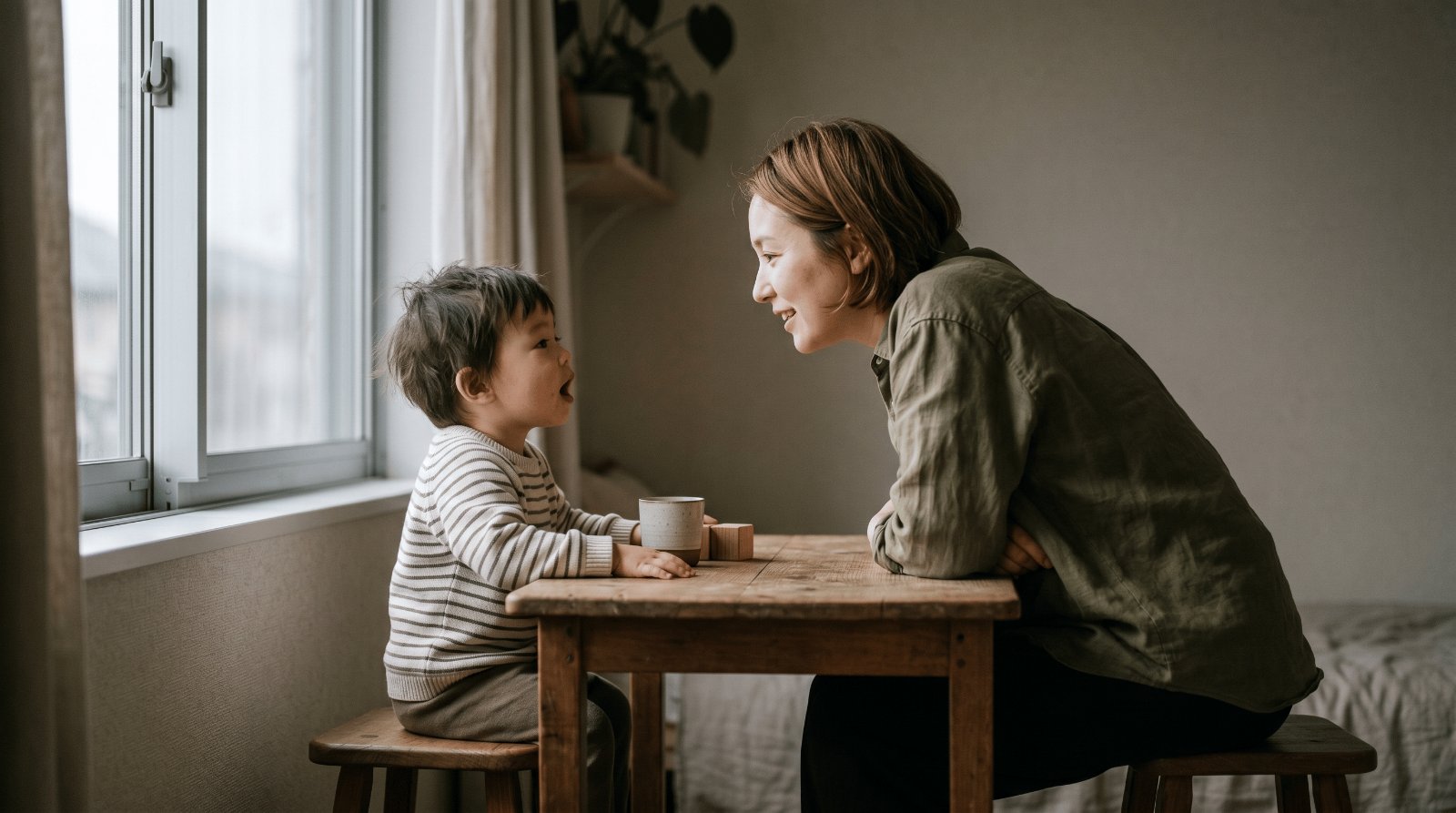
The first time your child says a real word is one of those moments that stays with you. But the journey from babble to "first word" can feel mysterious while you're in it. Here's what's happening, and how you can gently help along the way.
Words don't arrive out of nowhere
Long before a child says a word, they're collecting it. Receptive language — the words a child understands — runs well ahead of expressive language, the words they can say. Your toddler likely understands dozens of words they can't yet produce.
That gap is normal and important. It means the work you do talking to your child is landing, even when nothing comes back yet. You're filling the reservoir. The words will pour out later.
The single biggest lever: how much they hear
If there's one finding that comes up again and again, it's this: the sheer number of words a child hears each day strongly predicts how their language develops. Not flashcards specifically, not apps, not any product — just rich, warm, frequent language.
The good news is this doesn't require a curriculum. It requires narration:
- Talk through your day. "I'm pouring the milk. Now the banana — slice, slice, slice." Mundane to you, gold to them.
- Name what they look at. Follow their gaze and label it. Their attention is already there; you're just adding the word.
- Repeat and expand. Child says "dog"? You say "Yes! A big brown dog." You've affirmed and added in one breath.
- Read together, often. Picture books are vocabulary machines, and the cuddle makes them want more.
Where pictures and pictures-with-sound help
Concrete, nameable images give early language something to grab onto. A real photo of a cow, paired with the spoken word "cow," ties sound to meaning to image all at once. Do it in two languages and you're building two reservoirs side by side.
This is the small, specific job a tool like Pictocards is built for: a calm card, a clear photo, the word spoken aloud in Swedish and English. Not a replacement for your voice — a companion to it, for the moments when hearing the word said clearly, again and again, helps it settle.
Patience is a strategy
It's easy to compare. The neighbour's child is stringing sentences together; yours is still pointing. But children reach milestones on wildly different timelines, and early talking isn't a measure of intelligence or future ability.
Keep talking, keep reading, keep playing. Follow their lead, celebrate every attempt, and resist the urge to turn moments into tests. And if you ever feel genuinely worried about your child's progress, a chat with your doctor or a speech-language pathologist is always worthwhile — early support is a gift, not an alarm.
The first word will come. And when it does, you'll know all that everyday talking is exactly what got them there.