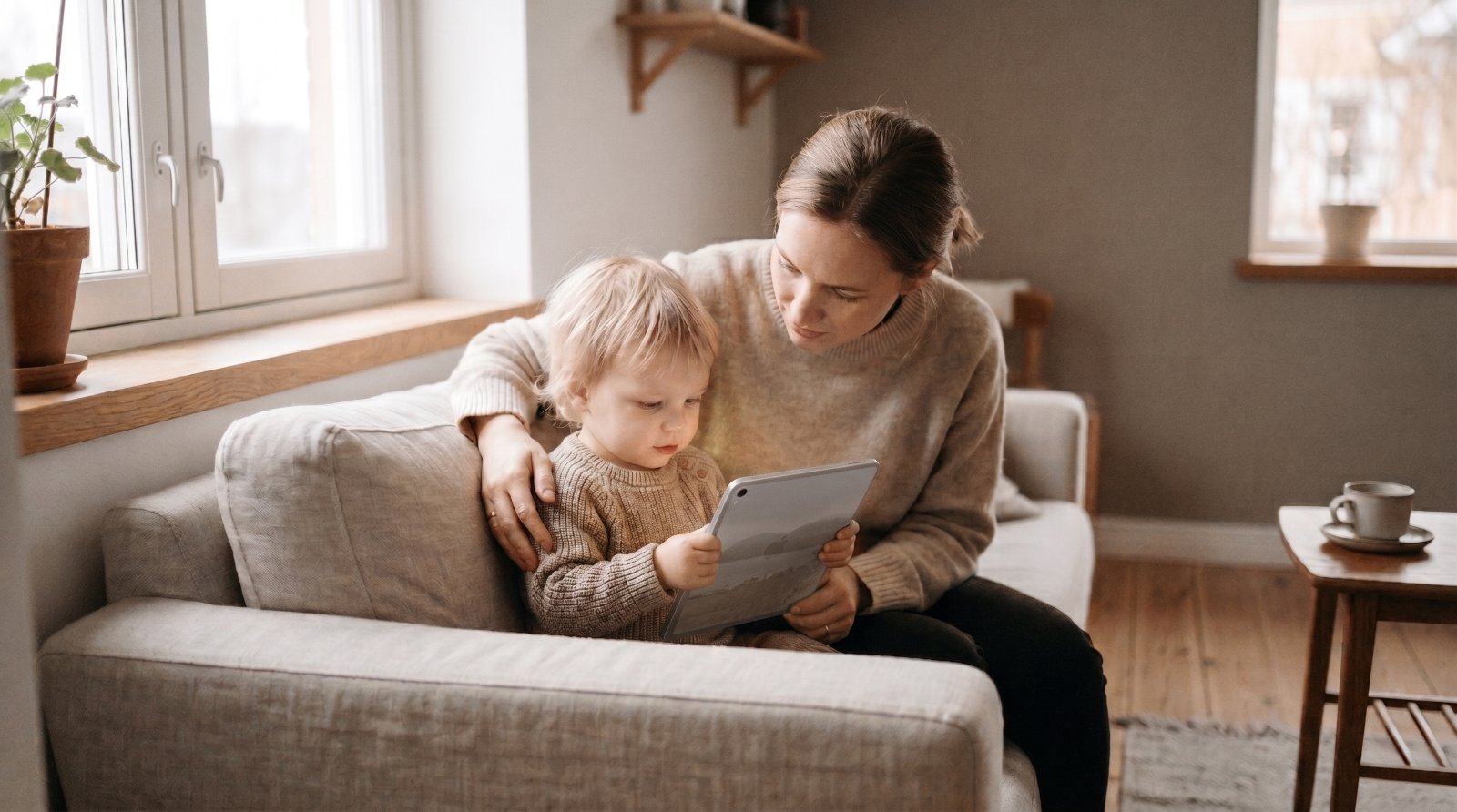
Flashcards have a bit of a reputation problem. Say the word and people picture a stern quiz: hold up card, demand answer, repeat. For a toddler, that's a fast route to losing interest.
But a deck of cards is really just a box of starting points. Here are seven ways to use them that feel like play, because play is how toddlers learn best.
1. Follow the favourites
Let your child pick the cards. If they pull out the same dog card eight times in a row, that's not a problem to fix — it's an interest to follow. Talk about the dog. Make the sound. Their curiosity is the engine; you're just along for the ride.
2. The naming walk
Take a card's subject into the real world. Looking at the cow card? Next time you pass a field, or see a cow in a book, point and connect: "Look — a cow! Like our card." Linking the picture to real life is where language sticks.
3. Sound matching
Animals are perfect for this. Show the card, make the sound together, then turn it into a game: you make a sound, they guess the animal, then swap. Giggling is a sign it's working.
4. Hide and find
Tuck a few cards around the room. As your child finds each one, name it together with a little celebration. Movement plus language plus a tiny thrill of discovery — toddlers love it.
5. Multi-language tag team
If you're raising your child with more than one language, say each word in both. With pictocards we want this happens naturally — At the moment we have Swedish and English - — but you change the language in settings. Hearing both languages tied to the same picture is something we would like to explore in the future.
6. The bedtime three
Pick just three cards as part of a wind-down routine. Calm, quiet, predictable — the same kind of cards in the same order if your child likes that. It becomes less of a lesson and more of a ritual.
7. Let them teach you
Once your child knows a few, flip the roles. "I don't remember — what's this one?" Letting a toddler be the expert is wildly motivating and turns recall into a proud little performance instead of a test.
The one rule underneath all seven
Notice what every idea above has in common: no pressure to perform. You're modelling, playing, connecting — never quizzing. If your child responds with a word, wonderful. If they respond with a point, a sound, or just a smile, that's communication too, and it counts.
The best flashcard session is one your child wants to come back to. Keep it short, keep it warm, and stop while it's still fun.
That's also how we designed Pictocards to be used, in digital form. We approach with a calm card illustrations, realistic photographies, the word spoken aloud in multiple languages, and you right there beside them. The app supplies the words. You supply the magic and connection.